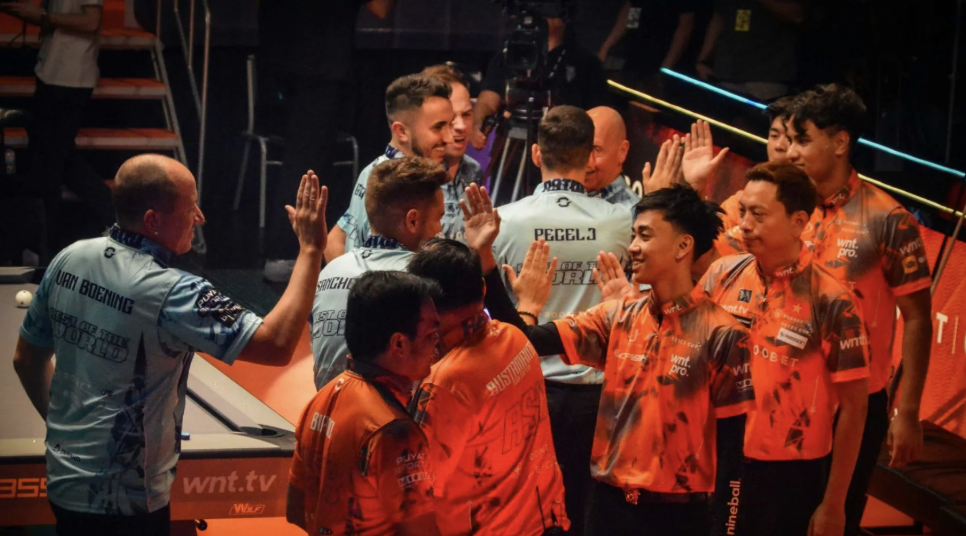
The Reyes Cup returned to the Philippines Thursday as defending champion Team Asia began another title defense at Makati Coliseum. Filipino world champion Carlo Biado joined Asia against a Rest of the World lineup packed with established international nineball stars.
Team Asia Begins Pursuit of Third Straight Crown
The third Reyes Cup runs from October 15 through 18, returning elite team nineball competition to Metro Manila. Team Asia enters as the two-time defending champion, having maintained control of the trophy through the event’s first two editions.
Filipino billiards legend Francisco “Django” Bustamante captains Asia, adding another celebrated Philippine figure to the tournament’s identity. German great Ralf Souquet leads Team Rest of the World, which arrived seeking its first victory in the competition.
Home Setting Adds Pressure to Asia’s Defense
Playing in Manila gives Team Asia significant crowd support, but defending consecutive championships also increases expectations surrounding every session. Bustamante must manage that pressure while balancing individual form with partnerships capable of handling short races where mistakes become disproportionately expensive.
Biado Gives Philippines Direct Role in Competition
Carlo Biado provides the strongest direct Filipino playing connection within Team Asia, bringing world-championship experience into the defending lineup. His presence gives local spectators a familiar player to support while Asia attempts to extend its perfect Reyes Cup record.
Biado partnered Hong Kong’s Robbie Capito during Thursday’s opening session, giving Asia a combination of experience and aggressive shotmaking. Their matchup became particularly important after the tournament’s opening team contest established immediate momentum for the defending champions.
Biado’s Experience Matters in Short-Race Format
Team competitions create different pressure because individual errors affect teammates and the overall scoreboard rather than one player alone. Biado’s experience in major international tournaments can become especially valuable when late racks demand composure before an energetic home audience.
Asia Builds Early Advantage Before World Responds
Team Asia claimed the opening contest 5-3 before Biado and Capito defeated Joshua Filler and Aleksa Pecelj convincingly, 5-1. Those results established a 2-0 advantage and temporarily placed the defending champions in complete control of Thursday’s opening session.
Rest of the World responded through Francisco Sánchez Ruiz before Shane Van Boening and Fedor Gorst delivered another important victory. Their comeback erased Asia’s advantage, leaving the overall competition tied 2-2 after an opening night filled with momentum swings.
Opening Night Shows Cup’s Competitive Balance
Asia’s fast start suggested another dominant home performance before Rest of the World demonstrated the depth within its experienced roster. A 2-2 score preserves uncertainty and increases the importance of lineup choices as Bustamante and Souquet plan subsequent sessions.
International Stars Strengthen Manila Tournament
The Rest of the World roster features several players familiar from major World Nineball Tour tournaments and the Mosconi Cup. Van Boening, Gorst, Filler, Sánchez Ruiz, and Pecelj provide contrasting playing styles while giving Manila spectators access to elite international talent.
Asia counters with competitors representing several of the region’s strongest emerging and established nineball programs alongside Biado. That structure helps the Reyes Cup operate as more than an exhibition because regional identity combines with meaningful competitive pressure across four sessions.
Elite Field Raises Philippine Billiards Visibility
Hosting leading international players gives Philippine cue sports another opportunity to showcase its passionate fan base and competitive heritage. The greater benefit comes when major events also encourage local tournaments and pathways capable of producing future Filipino professionals alongside established champions.
Reyes Cup Begins Major Manila Nineball Stretch
The Reyes Cup is followed by the Philippines Open Pool Championship, extending high-level nineball activity beyond this four-day team competition. That scheduling gives local supporters an extended opportunity to watch leading professionals without traveling to established international billiards destinations.
Philippine hosting also reinforces the country’s historical relationship with pool, represented most prominently by legends including Efren Reyes and Bustamante. Sustaining major tournaments can connect that legacy with current competitors rather than allowing Philippine billiards identity to depend primarily upon past champions.
Recurring Events Can Strengthen Local Ecosystem
International tournaments create visibility, but Philippine billiards benefits most when major events become dependable parts of the sporting calendar. Regular elite competition can attract spectators, sponsors, developing players, and stronger domestic events while keeping Filipino cue sports connected internationally.
Analytical Breakdown
The 2-2 opening score shows Team Asia cannot depend upon home support or its previous Reyes Cup championships. Biado’s experience gives the hosts valuable composure, especially when short races amplify the consequences of individual positional mistakes. Manila gains broader value if recurring international events help connect Philippine billiards history with another generation of competitive players.