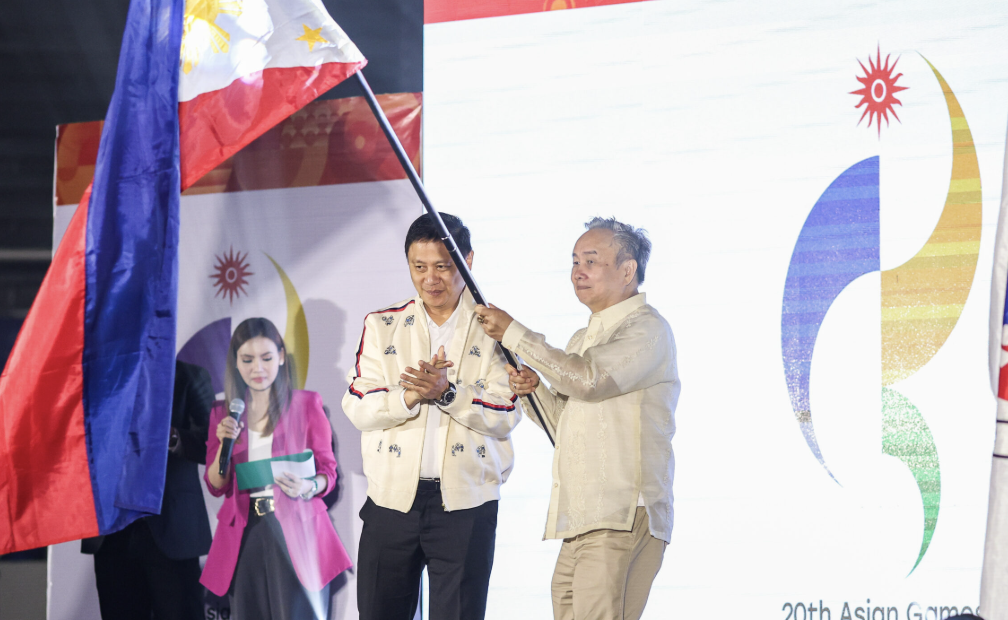
Athlete Support Systems Boost Philippines’ Continental Ambitions
Team Philippines enters the Aichi-Nagoya Asian Games with an ambitious target of at least eight gold medals. The delegation combines established international contenders with athletes receiving institutional and private-sector assistance throughout preparations for Japan.
POC Sets Eight-Gold Target for Philippines
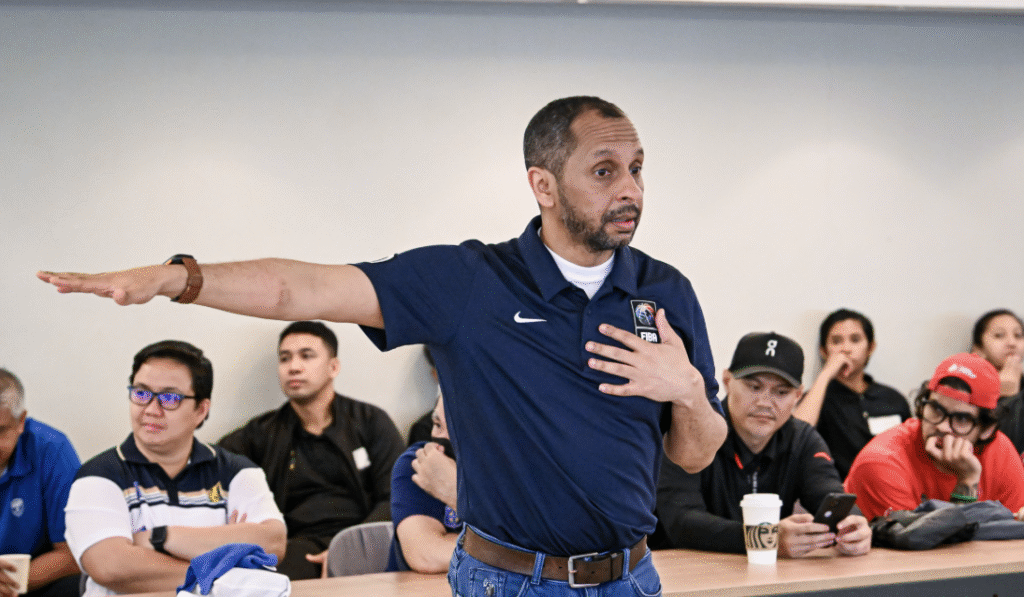
Ralph Edwin Villanueva of Philstar.com detailed Philippine Olympic Committee president Bambol Tolentino’s expectations before the continental competition. Tolentino said the delegation was well prepared while expressing confidence that Filipino athletes could surpass recent Asian Games performances.
The POC president set a target of at least eight gold medals, doubling the country’s output from recent editions. He also described the delegation as exceptionally strong while highlighting the depth of Philippine teams competing across multiple disciplines.
“Our athletes are well prepared for the Asian Games. This is the most star-studded and biggest delegation.”
“These are the strongest teams, and we are confident of breaking our records.”
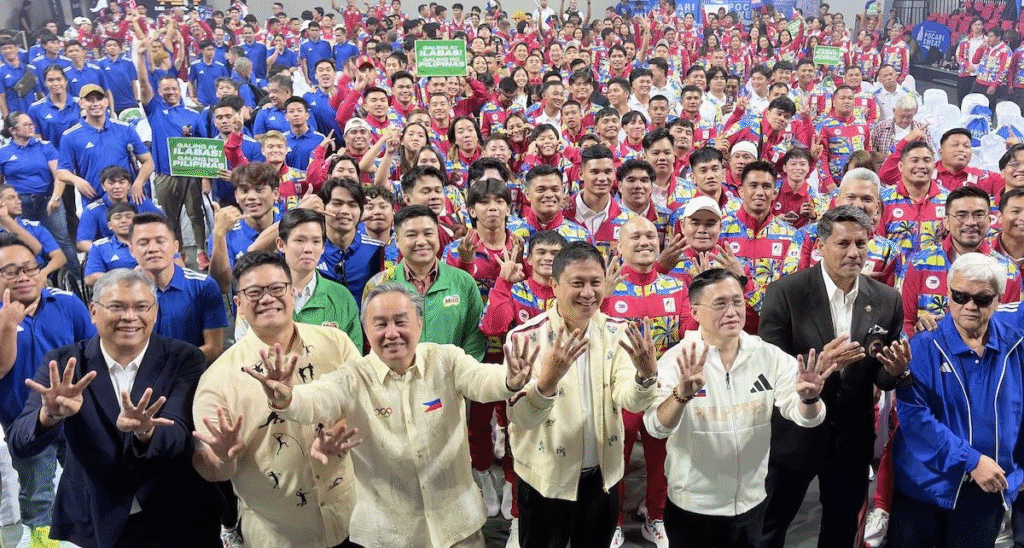
Image from: Rappler
Goal Doubles Recent Gold-Medal Output
The eight-gold objective represents twice the Philippine total achieved during each of its previous two Asian Games campaigns. That comparison establishes a clear performance benchmark without treating the POC’s ambitious target as a guaranteed competitive outcome.
Previous Asian Games Set Performance Benchmark
The Philippines captured four gold medals at the 2018 Asian Games in Indonesia before matching that total in Hangzhou. Those consecutive four-gold campaigns provide the most relevant recent benchmark for evaluating the POC’s considerably higher 2026 objective.
Historical context also shows eight gold medals would match the Philippine total achieved during the 1958 Asian Games in Tokyo. The country later collected seven golds at Jakarta 1962 before going decades without surpassing four championships at one edition.
Philippines Won Four Golds Twice
Recent Philippine performances demonstrate consistency at four gold medals, making the 2026 target a significant increase over both campaigns. Measuring the delegation against those results provides clearer context than presenting eight gold medals as an unprecedented national total.
Private Support Strengthens Athlete Preparation
Tolentino also emphasized private-sector involvement while discussing financial support available to athletes preparing for major international competitions. His remarks included recognition of sponsors and supporters, including SportsPlus, working alongside existing Philippine sports institutions.
Mixed martial artist Gina Iniong similarly credited the POC and private supporters for prioritizing athletes throughout their preparations. Her comments described financial and logistical assistance as meaningful support when competitors encounter problems during training and competition preparations.
“Whether it is the SEA Games, Asian Games, or Olympics, without the support, the athletes cannot make it.”
“The POC has given us its one hundred percent support. The support from sponsors means a lot to us.”
Iniong Credits POC and Sponsors
Iniong said supporters provide assistance when problems emerge while keeping athletes’ preparation requirements among their primary considerations. Her account provides an athlete-level perspective complementing Tolentino’s broader explanation of private backing within the national sports program.
Recommended Article: UAAP Season 89 Adds Stricter FIBA Discipline Rules
Valdez Highlights Costs Behind Elite Competition
Shooter Jayson Valdez also emphasized private-sector assistance while discussing the financial demands surrounding his preparation for international competition. He described shooting as an expensive discipline with a comparatively limited audience, making outside assistance particularly meaningful for participating athletes.
Valdez’s comments illustrate how financial requirements differ across sports represented within a large national delegation at multi-sport competitions. Equipment-intensive disciplines can create preparation demands that make sustained institutional and private assistance especially relevant for internationally competitive athletes.
“It is a huge help, especially for us with a limited audience.”
Shooting Requires Sustained Financial Support
Valdez connected private-sector assistance directly with the financial realities facing athletes competing in a comparatively expensive sporting discipline. His perspective adds discipline-specific context to the POC’s broader argument concerning partnerships supporting national-team preparation before major competitions.
Aichi-Nagoya Games Begin September 19
The 20th Asian Games officially run from September 19 through October 4 across Aichi Prefecture and Nagoya City. Organizers expect athletes from across Asia to compete during the 16-day continental multi-sport event hosted in central Japan.
Team Philippines enters that competition after the POC established eight gold medals as its stated target for the delegation. That objective follows consecutive four-gold campaigns while placing greater attention on preparation, athlete support, and performances across multiple disciplines.
Philippines Joins Asia’s Continental Field
The Aichi-Nagoya Games bring together national delegations across numerous sports, creating different medal opportunities throughout the Philippine campaign. Final results will provide a measurable comparison with both the POC’s eight-gold objective and the country’s recent four-gold performances.
Industry Analysis: Backing the Athletes
The POC’s eight-gold target creates a transparent performance benchmark while highlighting the resources supporting Philippine athletes before international competition. Consecutive four-gold campaigns provide useful historical context, but the target itself remains an organizational objective rather than a performance forecast.
Athlete testimony also shows how the Philippine preparation model combines institutional assistance with private-sector partnerships across differently funded sports. That support cannot determine competitive outcomes, but it forms part of the infrastructure allowing athletes to prepare for continental competition.
Source Note: This report draws primarily from Ralph Edwin Villanueva’s Philstar.com coverage featuring Tolentino, Gina Iniong, and Jayson Valdez. Historical results and event details are supported by additional Philstar reporting and official Aichi-Nagoya 2026 organizing information.
Frequently Asked Questions
How many gold medals is Team Philippines targeting?
The Philippine Olympic Committee is targeting at least eight gold medals during the 2026 Aichi-Nagoya Asian Games in Japan.
How many golds did the Philippines win recently?
The Philippines captured four gold medals during both the 2018 Indonesia and 2023 Hangzhou editions of the Asian Games.
Has the Philippines previously won eight Asian Games golds?
Yes, the Philippines captured eight gold medals during the 1958 Asian Games held in Tokyo, Japan.
Why is private-sector support important for athletes?
Tolentino, Iniong, and Valdez described private assistance as important for supporting preparation and addressing athletes’ competition-related requirements.
When will the 2026 Asian Games take place?
The Aichi-Nagoya Asian Games run from September 19 through October 4 across Aichi Prefecture and Nagoya City.
Disclaimer: Headline Image from Inquirer Sports – Inquirer.net