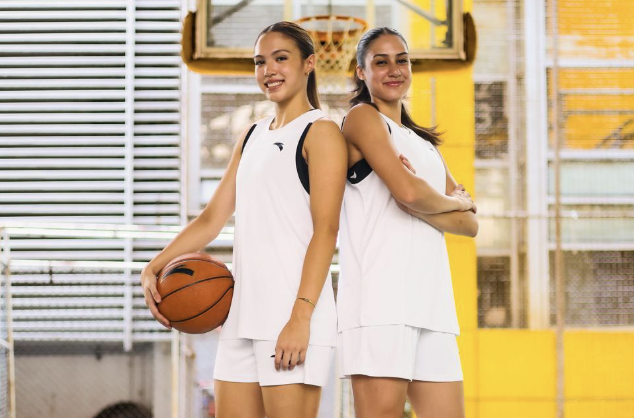
UST forwards Naysa Tate and Erinn McAlary have joined Anta Philippines as athlete-ambassadors while Philippine women’s basketball gains wider attention. Their agreements connect two emerging collegiate players with a major sportswear brand before another important stage of their UAAP development.
Anta Philippines Backs Two Emerging UST Standouts
Both 19-year-old Fil-Australian forwards bring different strengths to UST, with Tate providing wing scoring and McAlary offering frontcourt floor-spacing. Tate developed through Australian junior basketball, while McAlary adds versatility within coach Haydee Ong’s fast-paced system in España.
In coverage by GMA Network, Anta’s JP Paglinawan explained that identifying promising athletes early shaped the company’s decision. He also connected the partnership with the growing influence of UAAP women’s basketball on the national-team player pipeline.
“For the brand, we’re looking at who’s next, who are the up-and-coming stars.”
Paglinawan said several Gilas Pilipinas Women players developed through the UAAP, strengthening the collegiate league’s importance within Philippine women’s basketball.
UST Culture Keeps Team Identity Ahead of Individual Attention
Ong has built the Growling Tigresses around depth and collective execution instead of depending heavily on individual stars each season. That approach gives Tate and McAlary defined responsibilities while allowing their individual skills to complement UST’s established run-and-gun basketball identity.
“Every year, we have players graduating, but we also have players coming in.”
Ong emphasized that UST’s identity remains consistent despite roster turnover, with teamwork continuing to shape the program’s competitive approach. Her “Walang iwanan” philosophy also provides players with support while handling challenges created by basketball and growing public attention.
Brand Attention Adds Another Development Challenge
College athletes receiving commercial opportunities must balance increased visibility with the daily demands of training, academics, and team responsibilities. UST’s established support structure could become increasingly valuable as Tate and McAlary navigate expectations surrounding their growing profiles.
Women’s Basketball Visibility Creates New Commercial Opportunities
Women’s collegiate basketball now benefits from greater television exposure and stronger spectator interest, creating additional opportunities for athletes beyond competition. Ong contrasted today’s environment with her playing years, when women’s basketball had significantly less visibility and fewer established followers.
“What really makes a difference now is that our games are televised so people can see for themselves how women’s basketball is evolving.”
Ong also credited the recent UST-NU rivalry with creating a continuing storyline capable of keeping audiences invested between seasons. Paglinawan similarly pointed toward digital accessibility, which allows supporters to follow games more easily through mobile platforms and online coverage.
Tate and McAlary Represent UST’s Developing Core
Tate’s Australian junior experience gives UST another dynamic scoring option capable of operating from the wing within transition-heavy possessions. McAlary provides a different dimension through frontcourt spacing, giving the Growling Tigresses another potential option within their balanced offensive structure.
Their Anta agreements increase their individual visibility, but their collegiate development will continue depending primarily on performance within UST’s team-oriented system. Consistent minutes, tactical growth, and adaptability should ultimately determine how both forwards progress throughout their remaining collegiate basketball careers.
Analytical Breakdown
As a recreational basketball player, I see Tate and McAlary’s versatility fitting naturally within UST’s preference for fast-paced basketball. Tate’s wing scoring can stretch transition defenses, while McAlary’s floor-spacing gives teammates additional driving opportunities against crowded half-court coverage. Their development becomes especially valuable when those individual strengths improve UST’s collective execution rather than creating dependence on isolated production.
Commercial recognition also reflects women’s basketball gaining visibility, but sustained growth still depends on stronger competition and accessible coverage. Televised UAAP games allow emerging players to build recognizable profiles while giving younger athletes visible pathways through collegiate basketball. Tate and McAlary now have opportunities to develop those profiles while proving their value within UST’s established team-first culture.