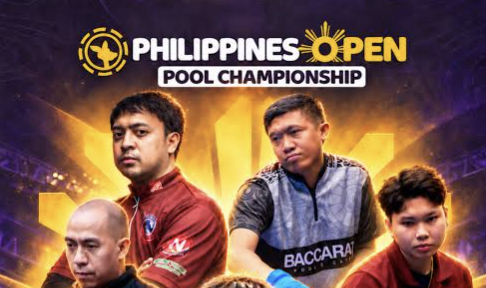
The Philippines Open Pool Championship opened Tuesday, bringing another elite World Nineball Tour tournament into Metro Manila. Carlo Biado headlines the Filipino contingent competing against international champions at Gateway Mall in Quezon City through Saturday.
Philippines Open Follows Reyes Cup
The individual championship began only two days after the Reyes Cup concluded its four-day team competition in Makati. Manila therefore remains the center of international nine-ball action as players transition from team competition toward an individual knockout tournament.
World Nineball Tour scheduled the Philippines Open from October 20 through 24 at Gateway Mall in Quezon City. The tournament’s immediate placement after the Reyes Cup creates nine consecutive days showcasing elite international pool within Metro Manila.
Individual Format Changes Competitive Dynamic
Team competitions reward communication and collective momentum, while knockout tournaments place every competitive consequence directly upon individual players. Reyes Cup participants must quickly reset because previous team performances provide no protection once Philippines Open elimination matches begin.
Biado Leads Strong Filipino Contingent
Former world champion Carlo Biado enters as one of the Philippines’ most established international contenders within the tournament field. Johann Chua and several other Filipino professionals also receive opportunities to compete against leading World Nineball Tour players on home soil.
Filipino pool enjoys exceptional competitive history, but reputation alone cannot guarantee deep runs through a modern international field. Local players must navigate opponents accustomed to major tournaments where one poor race can immediately end championship ambitions.
Home Crowd Creates Opportunity and Pressure
Playing in Manila gives Filipino competitors familiar surroundings and substantial spectator support unavailable during most international assignments. That atmosphere can provide energy, although players must prevent expectations from influencing shot selection during increasingly tense elimination matches.
International Stars Strengthen Manila Field
The tournament field includes Aloysius Yapp, Francisco Sanchez Ruiz, Fedor Gorst, Joshua Filler, and defending champion David Alcaide. Their participation ensures Filipino contenders must defeat proven international opposition before converting home advantage into a championship.
Alcaide returned seeking another title after winning the inaugural Philippines Open during the previous edition. Defending championships can become especially challenging because opponents arrive with greater knowledge while expectations naturally increase around the returning winner.
Deep Field Raises Value of Filipino Success
Domestic victories become more meaningful when championship fields include players already proven across major World Nineball Tour events. Any deep Filipino run should therefore provide a useful benchmark measuring local contenders against the current international nine-ball standard.
Straight Knockout Leaves No Safety Net
The Philippines Open uses a 128-player straight-knockout format, making every match an immediate elimination contest from the opening round. Unlike double-elimination tournaments, players receive no second opportunity after losing their first assignment.
That structure rewards quick adaptation because competitors cannot spend early rounds gradually finding tournament rhythm after a poor start. Every rack carries greater importance when one match determines whether a player’s championship campaign continues or ends immediately.
Opening Matches Carry Immediate Consequences
Straight knockout creates pressure usually associated with later tournament stages from the moment players approach their first match. Filipino contenders need disciplined break execution and safety play because one prolonged mistake sequence can eliminate them before momentum develops.
Manila Strengthens Global Pool Presence
Hosting consecutive World Nineball Tour competitions gives the Philippines significant visibility within a sport carrying deep local history. Large Filipino audiences understand pool beyond casual entertainment, creating an atmosphere international players frequently recognize as distinctive.
The larger opportunity involves turning major-event enthusiasm into sustained pathways supporting younger Filipino players throughout the year. Elite tournaments inspire participation most effectively when aspiring competitors also receive accessible coaching, organized leagues, and regular domestic competition afterward.
Major Events Can Support Next Generation
Philippine billiards already possesses celebrated champions, but future success requires continually identifying and developing players behind them. Bringing world-class competition home allows younger players to observe elite standards directly while giving domestic contenders opportunities against internationally proven opponents.
Analytical Breakdown
Straight knockout makes the Philippines Open especially unforgiving because one poor match immediately ends a player’s championship. Filipino contenders gain valuable home support, but the international field eliminates any possibility of relying upon reputation alone. Manila’s strongest long-term benefit comes when major events help connect Philippine billiards history with another generation of competitive players.