Malaysia Ends Philippines’ ASEAN Championship Campaign in Kuala Lumpur
The Philippine Men’s National Football Team ended its 2026 ASEAN Hyundai Cup campaign with a 1-0 defeat against Malaysia. The Filipinos finished fourth in Group B with three points after entering Kuala Lumpur needing an extraordinary qualification turnaround.
Pavithran Gunalan Strikes Early Against Philippines
Malaysia quickly complicated the Philippines’ already difficult assignment when Pavithran Gunalan opened the scoring during the 16th minute. One Sports reporter Luisa Morales documented the decisive Group B encounter and the Filipinos’ qualification situation.
Gunalan spotted goalkeeper Patrick Deyto before producing a clever lob that sailed beyond him and reached the Philippine net. Conceding first left the Filipinos needing an even greater attacking response against a Malaysian side protecting home territory.
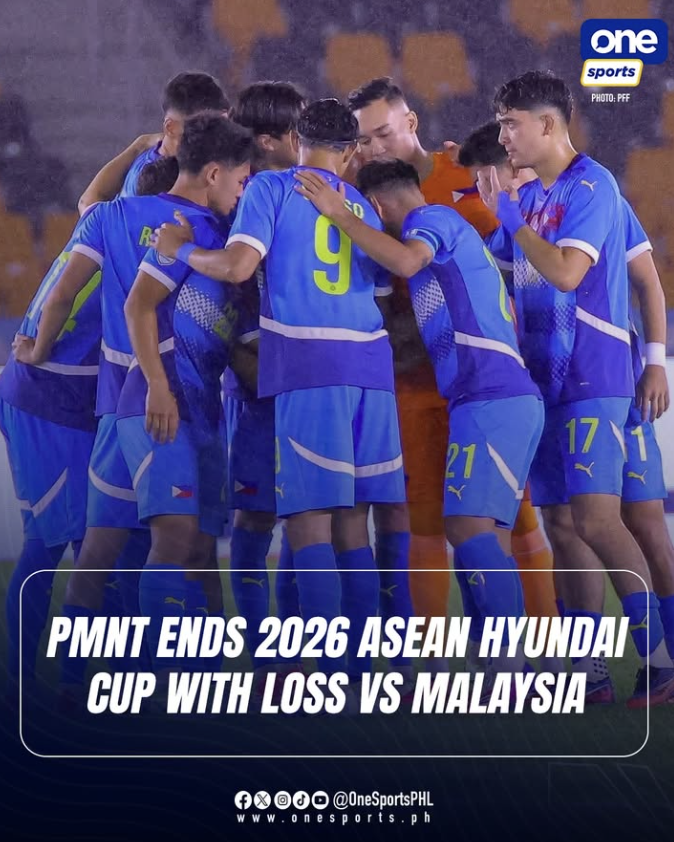
Image from: onesportsphl/Threads
Early Malaysia Goal Changes Qualification Chase
The Philippines entered Kuala Lumpur already requiring a six-goal victory alongside another favorable result to preserve its semifinal hopes. Gunalan’s opening goal increased that enormous requirement while giving Malaysia greater control over the match’s tactical direction.
Six-Goal Qualification Target Proves Too Steep
Earlier Group B results left the Philippines requiring far more than an ordinary victory during its final preliminary-round assignment. The Filipinos needed a massive goal-difference swing, forcing them to approach Malaysia with attacking urgency from the opening whistle.
Pushing additional players forward inevitably created greater defensive risks whenever Malaysia recovered possession and attacked through available spaces. After Gunalan struck early, the hosts protected their advantage while the Philippines struggled to produce the required attacking response.
Philippines Finishes Fourth in Group B
The defeat left the Philippines fourth in Group B with three points, ending its pursuit of another semifinal appearance. Malaysia finished second with nine points and joined unbeaten group winner Thailand in advancing into the tournament’s knockout stage.
Earlier dropped points proved costly because qualification no longer depended exclusively on beating Malaysia during the final group fixture. Goal difference and results elsewhere had already reduced Philippine control over its tournament future before kickoff in Kuala Lumpur.
Recommended Article: Malaysia Match Becomes Do-or-Die for Philippines
Philippines’ Final Group B Position
- Final points: three
- Final position: fourth
- Knockout qualification: eliminated
- Final group opponent: Malaysia
- Final match result: 0-1 defeat
Thailand and Malaysia Advance From Group B
Thailand completed an unbeaten group campaign by defeating Myanmar, 2-0, during the other decisive Group B fixture. The result confirmed Thailand as group winner while Malaysia secured second place and the remaining semifinal qualification spot.
Thailand advanced into a two-leg semifinal against Singapore, while Malaysia earned another demanding knockout matchup against defending champion Vietnam. Those pairings left the Philippines outside the final four after failing to accumulate enough points during its preliminary campaign.
Thailand Defeat Leaves Philippines Chasing Miracle
The Philippines’ qualification position became significantly harder after conceding late during its earlier 1-0 defeat against regional powerhouse Thailand. That result removed valuable breathing room and transformed the Malaysia fixture into an extreme goal-difference chase instead of straightforward qualification.
Short tournaments often magnify individual moments because one late goal can immediately reshape standings, tiebreakers, and subsequent tactical requirements. The Philippines experienced that consequence directly after entering its final assignment without complete control over its semifinal chances.
Malaysia Exploits Philippines’ Attacking Urgency
Chasing a six-goal victory required the Philippines to commit greater numbers forward while accepting additional defensive exposure during possession changes. Fullbacks needed advanced positions, while midfielders and attackers faced increasing pressure to create scoring opportunities before qualification became mathematically unreachable.
Malaysia’s early advantage allowed the hosts to remain organized while forcing the Filipinos into increasingly aggressive attacking decisions throughout proceedings. The Philippines never found an equalizer, allowing Malaysia to protect its narrow lead and complete the decisive victory.
Hyundai Cup Exit Highlights Costly Group-Stage Margins
The fourth-place finish represented a disappointing outcome after the Philippines reached the semifinals during the previous regional championship cycle. Narrow margins again shaped the campaign, particularly when earlier setbacks created an almost impossible requirement entering the final fixture.
Future tournament progress will depend on converting competitive performances into points before qualification scenarios become dependent on extreme goal differences. Stronger management across every group fixture can provide greater tactical flexibility when decisive matches arrive later in short tournaments.
Philippines Turns Attention Toward Asian Games
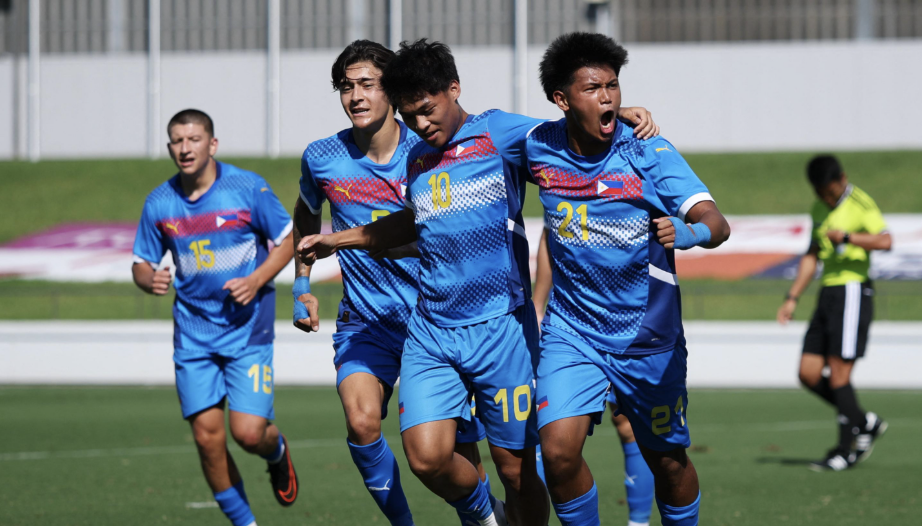
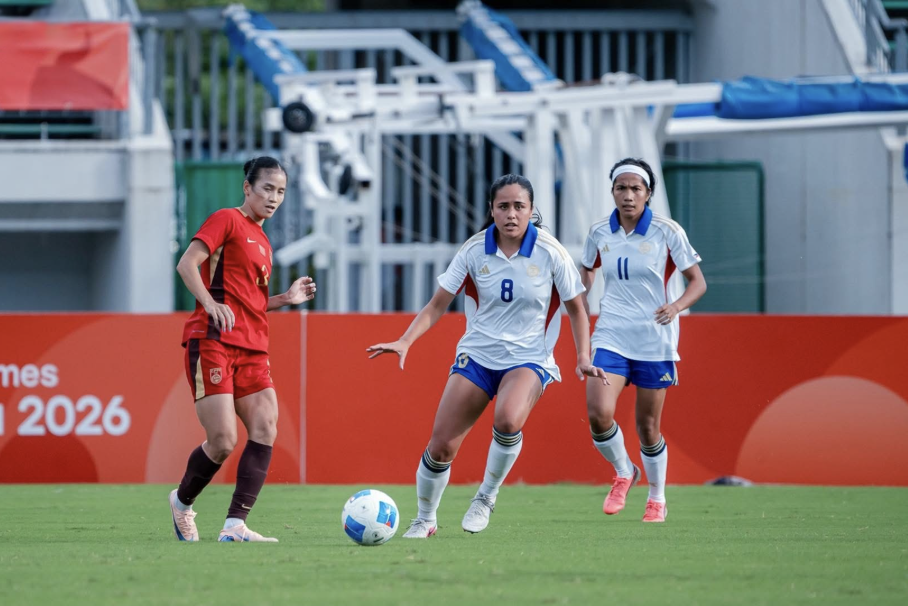
The national team’s attention now shifts toward another major international assignment at the 2026 Asian Games in Aichi-Nagoya, Japan. Philippine men’s football returns to the continental competition with another opportunity to expose developing players to high-level international tournament pressure.
Asian Games men’s football uses an age-restricted format while permitting limited overage selections, creating different roster considerations from senior competition. That structure gives younger Filipino players opportunities to gain tournament experience against opponents representing stronger football systems across Asia.
Asian Games Presents Different Test for Philippines
Competition against Asian opposition should provide another useful benchmark after the Philippines struggled to sustain results throughout its Hyundai Cup campaign. Faster decision-making and stronger technical execution will challenge younger players while revealing areas requiring further development within the national pathway.
The tournament also offers coaches competitive evidence when assessing players capable of contributing to future senior national-team campaigns. Those opportunities carry particular value as Philippine football continues building depth beyond the established options available during regional competitions.
Tournament Management Remains Key for Philippines
The Hyundai Cup demonstrated how quickly early dropped points can restrict tactical options during a short international group stage. Entering the Malaysia fixture needing six goals showed the consequences of reaching a final assignment without sufficient points or goal difference.
Future campaigns will require the Philippines to protect favorable results while consistently collecting points against direct qualification rivals throughout preliminary play. Better control of those margins can prevent another final-day scenario where advancement depends on an extraordinary result and outside assistance.
Analytical Breakdown: A Campaign Full of Lessons
Tournament football often rewards consistency across every group-stage match rather than dramatic final-day qualification scenarios. The Philippines entered its decisive fixture needing an unlikely goal difference, leaving little tactical flexibility against an organized Malaysian side. Early setbacks throughout the campaign ultimately created a qualification equation that became increasingly difficult to overcome.
The tournament also highlighted the importance of converting promising performances into consistent results against regional rivals. Stronger game management during decisive moments can prevent narrow defeats from becoming costly setbacks in the final standings. The upcoming Asian Games now provide another valuable opportunity to accelerate player development against higher-level opposition across the continent.
Frequently Asked Questions
Did the Philippines qualify for the 2026 Hyundai Cup semifinals?
No, the Philippines finished fourth in Group B with three points and failed to reach the tournament semifinals.
What was the Philippines versus Malaysia final score?
Malaysia defeated the Philippines, 1-0, during their final Group B match at Kuala Lumpur Stadium.
Who scored Malaysia’s goal against the Philippines?
Pavithran Gunalan scored the match’s only goal during the 16th minute after lobbing goalkeeper Patrick Deyto.
Why did the Philippines need a six-goal victory?
Earlier group-stage results left the Philippines requiring a huge goal-difference swing alongside another favorable result to advance.
Which teams advanced from Group B?
Thailand won Group B while Malaysia finished second, sending both teams into the two-leg Hyundai Cup semifinals.
Who will Malaysia face in the semifinals?
Malaysia will face defending champion Vietnam in the semifinals, while Thailand takes on Singapore in the other matchup.
What tournament will the Philippines play next?
The Philippines will shift its attention toward the 2026 Asian Games in Aichi-Nagoya following its Hyundai Cup elimination.
Disclaimer: Headline Image from Philippine Football Federation.