
Racism And Islamophobia Follow Spain’s World Cup Victory
Spain celebrated its 2026 FIFA World Cup triumph, but the historic achievement was accompanied by a disturbing rise in online racism and Islamophobia directed toward teenage sensation Lamine Yamal. Instead of focusing solely on Spain’s success, much of the online conversation exposed the persistent discrimination that continues affecting athletes on global sporting stages.
The controversy demonstrated how modern football extends beyond competition, with social media increasingly shaping public narratives surrounding players, identity, and cultural diversity. Spain’s World Cup celebration ultimately highlighted both the unifying power of football and the continuing challenges posed by digital hate speech.
Lamine Yamal Becomes the Face of Online Abuse
Anadolu reported that Spain’s Observatory on Racism and Xenophobia (OBERAXE) identified 40,861 pieces of hate-related online content during June, with football becoming the second-largest source of discriminatory narratives after public security issues. The findings identified Lamine Yamal as one of the primary targets throughout Spain’s successful World Cup campaign.
Born in Spain to a Moroccan father and an Equatorial Guinean mother, Yamal has become a powerful symbol of the country’s growing cultural diversity through football. Rather than celebrating his performances, many online discussions shifted toward his ethnic background and religious identity, fueling racist and Islamophobic narratives across multiple platforms.
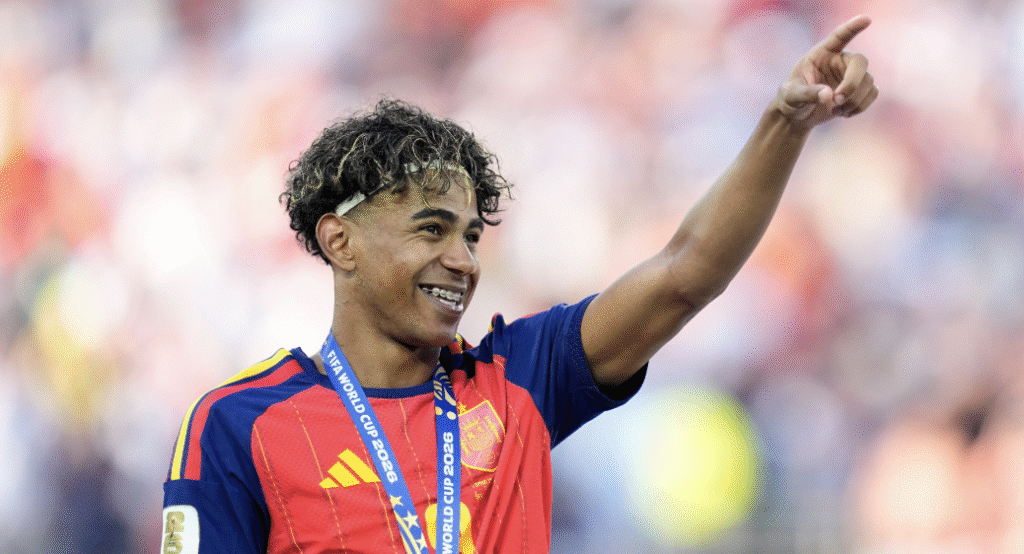
Image from: MARCA
Rising Star Faces Widespread Online Discrimination
Yamal’s experience demonstrated how elite athletes increasingly become targets of discrimination unrelated to their performances, particularly during globally watched sporting events. The report also illustrated how football’s enormous international audience can amplify hateful narratives far beyond the boundaries of the sport itself.
Yamal Responds With a Message of Unity
Public debate intensified before Spain’s semifinal against France after comments made by former Spanish Prime Minister Mariano Rajoy generated widespread political discussion. Rather than engaging with the controversy, Yamal emphasized football’s ability to unite diverse communities through shared passion and mutual respect.
His response reflected composure beyond his years while rejecting attempts to divide supporters along cultural, ethnic, or religious lines. Instead of amplifying controversy, the Spanish teenager reinforced football’s enduring role as a bridge connecting people from different backgrounds.
Football Should Unite Communities
“If football serves any purpose, it is to integrate, at the level of society.”
Yamal also pointed to both Spain and France as examples of multicultural societies strengthened through inclusion instead of division. His measured response stood in sharp contrast to the hostile online narratives circulating throughout the World Cup.
OBERAXE Data Highlights Growing Online Hate
OBERAXE’s findings illustrated how major international sporting events can unintentionally amplify discriminatory behavior across social media platforms with enormous global audiences. The June monitoring report identified football as one of the most significant drivers of hate-related online discussions during Spain’s championship campaign.
The observatory’s data also demonstrated that discriminatory narratives increasingly target ethnic and cultural identities instead of sporting performances alone. Those findings reinforce growing concerns about protecting athletes from coordinated online abuse during globally followed sporting competitions.
Recommended Article: Roberto Ayala Says Sorry Over Dani Olmo Clash
Key Findings From the OBERAXE Report
- 40,861 hate-related online posts detected during June
- Sports accounted for 16% of monitored hate-related content
- Public security represented 69%, the largest monitored category
- People of North African origin appeared in 88% of targeted content
- That figure increased by 10 percentage points compared with May
AI-Generated Misinformation Creates Additional Risks
Investigators also documented the growing use of artificial intelligence to produce fabricated content designed to intensify discriminatory narratives surrounding prominent football players. Those manipulated materials extended beyond direct insults by presenting false information that appeared convincing to unsuspecting audiences across multiple social media platforms.
One fabricated video falsely claimed Spanish broadcaster Canal 24 Horas had linked Yamal to “radical Islamism,” despite having no factual basis whatsoever. Other manipulated posts attempted to misrepresent religious symbols supposedly associated with the teenager, illustrating how misinformation increasingly accompanies coordinated online abuse.
Fabricated Content Complicates Online Moderation
The spread of AI-generated misinformation demonstrates that protecting athletes now requires addressing both traditional hate speech and increasingly sophisticated digital manipulation. Distinguishing authentic information from fabricated content has therefore become significantly more challenging for platforms, governing bodies, and ordinary users alike.
Social Media Platforms Deliver Uneven Moderation Results
OBERAXE reported that 61 percent of flagged content was removed across participating platforms, representing a slight decline from May’s recorded removal rate. The varying results also highlighted considerable differences in how individual social media companies respond to reports involving hate speech and discriminatory content.
The observatory further concluded that reports submitted through its trusted flagger program consistently achieved significantly higher removal rates than ordinary user submissions. Those findings underscore the growing importance of specialized monitoring organizations working directly with technology companies to combat online discrimination.
Reported Content Removal Rates
- TikTok — 98%
- X — 93%
- Facebook — 62%
- Instagram — 32%
- YouTube — 8%
Football Reflects Broader Social Challenges
The abuse directed toward Lamine Yamal illustrates how football frequently mirrors wider political, cultural, and social tensions extending far beyond sporting competition. Major international tournaments place athletes under extraordinary global attention, increasing their exposure to discrimination unrelated to their performances on the field.
Spain’s World Cup triumph united millions of supporters while simultaneously revealing the harmful influence social media can exert during celebrated sporting moments. Protecting athletes from online abuse will remain an increasingly important responsibility as football’s worldwide digital audience continues expanding every year.
Safeguarding Players Requires Collective Action
Football organizations, governments, technology companies, and supporters all share responsibility for creating safer digital environments that protect athletes from targeted discrimination. Stronger moderation systems, improved reporting mechanisms, and greater public awareness remain essential in limiting the spread of online hate and misinformation.
Analytical Breakdown: The Cost of Online Hate
Modern football extends well beyond the pitch, with major international tournaments generating millions of online interactions that can shape public perception as much as the matches themselves. The abuse directed at Lamine Yamal illustrates how elite athletes increasingly face challenges linked not only to sporting performance but also to identity, misinformation, and the rapid spread of harmful content across digital platforms.
The findings released by OBERAXE also underscore the growing role of governing bodies, social media companies, and monitoring organizations in safeguarding players from online discrimination. As football’s global audience continues to expand, effective moderation systems, transparent reporting mechanisms, and coordinated responses will become increasingly important in protecting both athletes and the integrity of the sport.
Frequently Asked Questions
Why was Lamine Yamal targeted online?
OBERAXE found that Yamal became one of the primary targets of racist and Islamophobic abuse during Spain’s 2026 FIFA World Cup campaign.
What is OBERAXE?
OBERAXE is Spain’s Observatory on Racism and Xenophobia, which monitors discriminatory content and online hate speech across digital platforms.
How much hate-related content did OBERAXE detect?
The observatory identified 40,861 pieces of hate-related online content during its monitoring period in June 2026.
Which platform removed the highest percentage of reported content?
TikTok recorded the highest reported removal rate by taking down 98 percent of flagged discriminatory content.
Disclaimer: Headline Image from The New York Times.