Young Filipino Fencers Capture Two Team Gold Medals in Malaysia
The Philippine junior fencing team delivered another impressive international performance after securing two team gold medals in Kuala Lumpur, Malaysia. The victories highlighted the country’s continued progress in developing competitive young fencers capable of succeeding against Southeast Asia’s strongest programs.
The successful campaign also demonstrated the growing depth of Philippine fencing across multiple weapons and age-group categories. Team victories often reflect years of athlete development because every relay depends upon consistent performances from several competitors instead of individual excellence.
Women’s Foil Squad Leads Historic Medal Surge
The Southeast Asian Fencing Federation Cadet and Junior Championships bring together the region’s leading youth athletes across foil, epee, and saber disciplines. Junior competitors gain valuable international experience through the tournament before progressing toward senior continental championships and future Olympic qualification events.
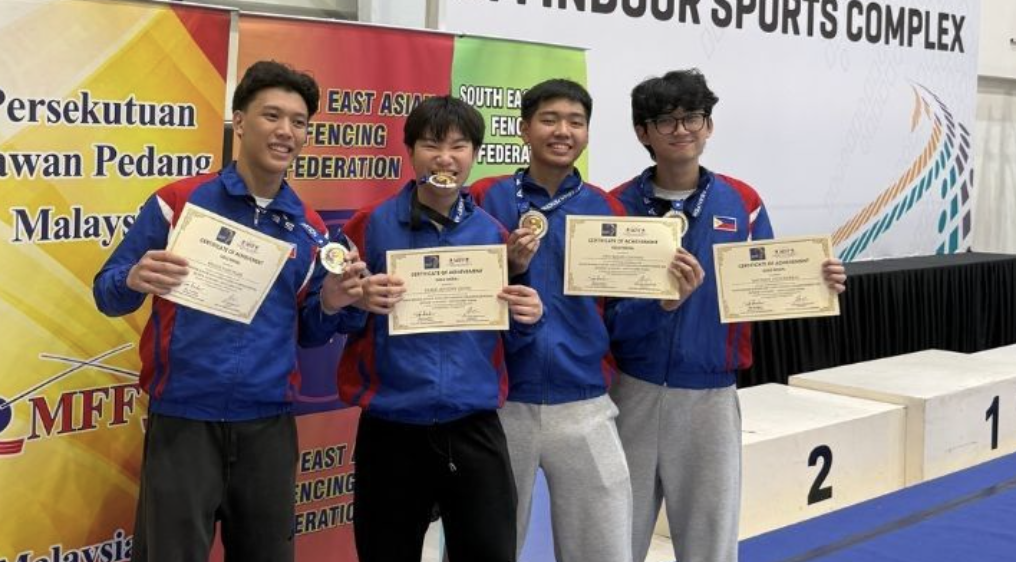
The Philippines reached another milestone after winning both the junior women’s team foil and junior men’s team saber championships. According to Randy Caluag, the victories contributed to an eight-medal team campaign that strengthened the country’s reputation in regional fencing.
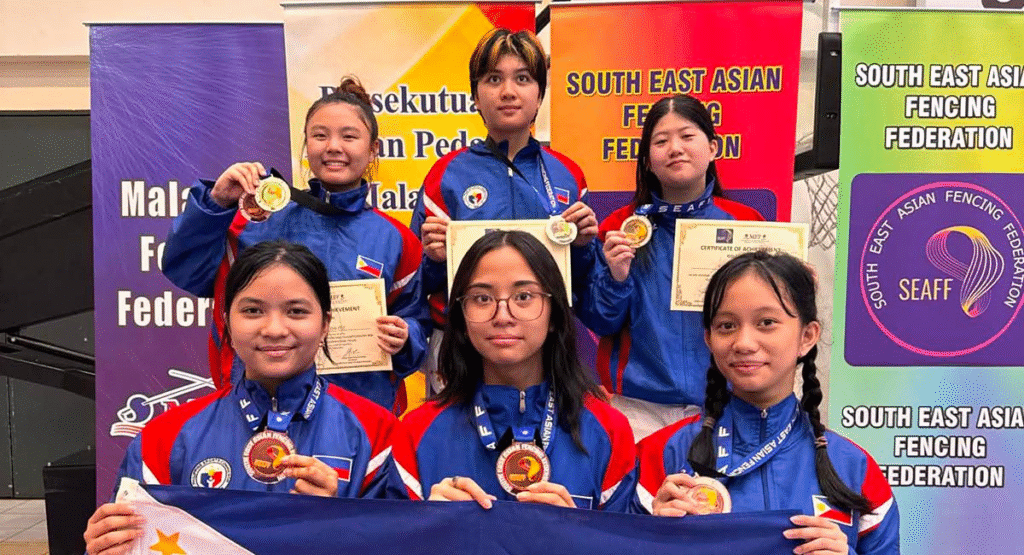
Image from: SPIN.ph
Relay Format Rewarded the Philippines’ Consistency
Team fencing follows a relay format where teammates compete in consecutive bouts until one side reaches the target score. That structure rewards consistency because every athlete contributes directly toward the team’s cumulative result rather than competing independently.
Victoria Ebdane, Willa Galvez, and Jodie Tan defeated Vietnam, 44-37, to secure the junior women’s team foil championship. Earlier, they narrowly survived an all-Filipino semifinal after edging Team B by a dramatic 29-28 scoreline.
Galvez Delivers Championship-Defining Performance
The championship final shifted decisively during the fourth relay after the Philippines carried only a narrow three-touch advantage over Vietnam. Momentum changed when Willa Galvez produced one of the strongest individual relay performances during the entire championship match.
Galvez’s dominant bout created valuable separation that allowed the Philippines to control the remaining relays until securing another regional title. Her performance also demonstrated the composure required during pressure situations frequently encountered in international team fencing competitions.
Young Foilist Produced the Match’s Biggest Offensive Display
Galvez overwhelmed Vietnam’s Nguyen Thi Anh Thu by a commanding 10-1 margin during her decisive relay appearance. She eventually finished with twenty-one touches, the highest offensive contribution recorded by either team during the championship final.
Her teammates also provided important scoring support throughout the final:
- Willa Galvez — 21 touches
- Victoria Ebdane — 13 touches
- Jodie Tan — 10 touches
The balanced scoring distribution illustrated why successful team fencing depends upon collective execution instead of relying entirely on one standout performer.
Junior Men’s Saber Team Captures Second Championship
The Philippines completed a memorable day after its junior men’s saber squad defeated Thailand to secure another regional championship. Winning titles across two different weapons demonstrated encouraging progress throughout the national youth development program rather than success within only one discipline.
International fencing features three Olympic weapons, each requiring distinct technical approaches despite sharing fundamental tactical principles. Foil emphasizes precision against a restricted target, epee allows full-body scoring, while saber combines cutting and thrusting attacks above the waist.
Balanced Lineup Secured the Second Gold Medal
Khiane Felipe, Vito Coching, Drake Chung, and Matthew General combined to defeat Thailand, 45-40, in the junior men’s team saber final. The Philippine quartet maintained its composure despite Thailand’s late challenge before successfully closing out another championship victory.
Philippine Delegation Produces Strong Medal Performance
The Philippines complemented its two gold medals with several additional podium finishes across multiple junior team competitions in Kuala Lumpur. Success in different weapon categories reflected increasing competitive depth instead of relying on only a small group of elite athletes.
Winning medals across foil, epee, and saber demonstrates the effectiveness of a development system producing well-rounded athletes throughout the federation’s pathway. Broader success also strengthens future national teams because more competitors gain valuable international experience before entering senior-level tournaments.
Eight Team Medals Highlight Depth Across Multiple Weapons
The Philippine delegation collected the following team medals during the championships:
- Gold — Junior Women’s Team Foil
- Gold — Junior Men’s Team Saber
- Silver — Junior Women’s Team Saber
- Bronze — Junior Men’s Team Epee
- Bronze — Junior Women’s Team Foil (Team B)
- Bronze — Junior Women’s Team Epee
- Bronze — Junior Men’s Team Foil
The widespread medal distribution demonstrated that several Philippine squads remained competitive against Southeast Asia’s strongest junior fencing programs.
Recommended Article: DOLE Fines Tab Baldwin P4.9M Over Permit Violations
Galvez Builds Momentum Through Individual and Team Success
Galvez entered the team competition after already earning an individual bronze medal during the junior women’s foil tournament in Kuala Lumpur. Carrying momentum into the relay competition allowed her to become one of the delegation’s most influential performers throughout the championship.
Winning medals in both individual and team events often demonstrates technical consistency, tactical adaptability, and strong competitive composure throughout demanding international tournaments. Those qualities become increasingly important as junior athletes transition toward senior continental championships and future Olympic qualification events.
Corporate Support Continues Backing Athlete Development
Galvez continues receiving support from organizations helping sustain her international fencing career and long-term athletic development.
Her current supporters include:
- Nickel Asia Corporation
- NLEX Corporation
- Rain or Shine
- MVP Sports Foundation
- Strong Group Athletics
- Pocari Sweat
- Icons Sports Management Services
Private sponsorship increasingly complements federation programs by helping athletes access international competitions, specialized coaching, equipment, and long-term performance development.
Cadet Competition Offers Additional Medal Opportunities
The Philippine delegation still has several opportunities to expand its medal tally before the Southeast Asian championships conclude in Malaysia. Cadet competitions feature younger athletes beginning their international careers while preparing for future junior and senior national team responsibilities.
Strong junior performances often create positive momentum entering cadet events because younger teammates gain confidence from the delegation’s earlier successes. Consistent results across both divisions also strengthen the country’s long-term athlete development pathway.
Remaining Events Continue the Philippine Campaign
The delegation will continue competing in the following events:
- Cadet Individual Epee
- Cadet Individual Foil
- Cadet Individual Saber
- Cadet Team Competitions
Success in those remaining events would further reinforce the Philippines’ reputation as one of Southeast Asia’s emerging fencing programs.
Youth Development Strengthens Philippine Fencing Pipeline
Long-term investment in grassroots competitions, coaching, school programs, and international exposure has steadily expanded the Philippine fencing talent pool. Those efforts have produced athletes capable of competing successfully across several Olympic weapons instead of concentrating success within one discipline.
Team championships frequently serve as indicators of organizational strength because they require multiple athletes performing consistently throughout an entire competition. Continued development across junior and cadet levels should provide stronger foundations for future Southeast Asian Games, Asian Championships, World Championships, and Olympic qualification campaigns.
Regional Success Reflects Sustainable Athlete Development
Consistent performances across several weapon categories suggest Philippine fencing continues building sustainable competitive depth throughout younger age groups. National federations producing balanced teams often maintain stronger long-term international competitiveness than programs relying upon isolated individual stars.
Continued exposure against Southeast Asia’s leading fencing nations will remain valuable as these athletes progress toward higher levels of international competition.
Industry Analysis: A Program Moving Forward
Success in team fencing frequently reflects the overall quality of a national development system rather than individual excellence alone. Countries consistently winning relay medals generally benefit from structured grassroots programs, experienced coaching, and regular international competition throughout multiple age divisions.
The Philippines’ medal distribution across foil, epee, and saber demonstrates encouraging progress toward building broader competitive depth among junior athletes. Maintaining investment in athlete development, coaching education, and international competition opportunities will remain essential as these fencers advance toward senior regional and global championships.
Source Note: This article is based on reporting by Randy Caluag and supplemented with publicly available information from the Philippine Fencing Association, the Southeast Asian Fencing Federation, and official competition results.
Frequently Asked Questions
How many gold medals did the Philippines win?
The Philippines captured two gold medals in the junior women’s team foil and junior men’s team saber competitions.
Who won the junior women’s team foil championship?
Victoria Ebdane, Willa Galvez, and Jodie Tan defeated Vietnam by a 44-37 score to secure the regional title.
Which athletes won the junior men’s team saber gold?
Khiane Felipe, Vito Coching, Drake Chung, and Matthew General combined to defeat Thailand, 45-40, during the championship final.
Why are junior and cadet championships important?
These tournaments provide young athletes with international experience while preparing them for future senior regional, world, and Olympic competitions.
Disclaimer: Headline Image from Philstar.com.