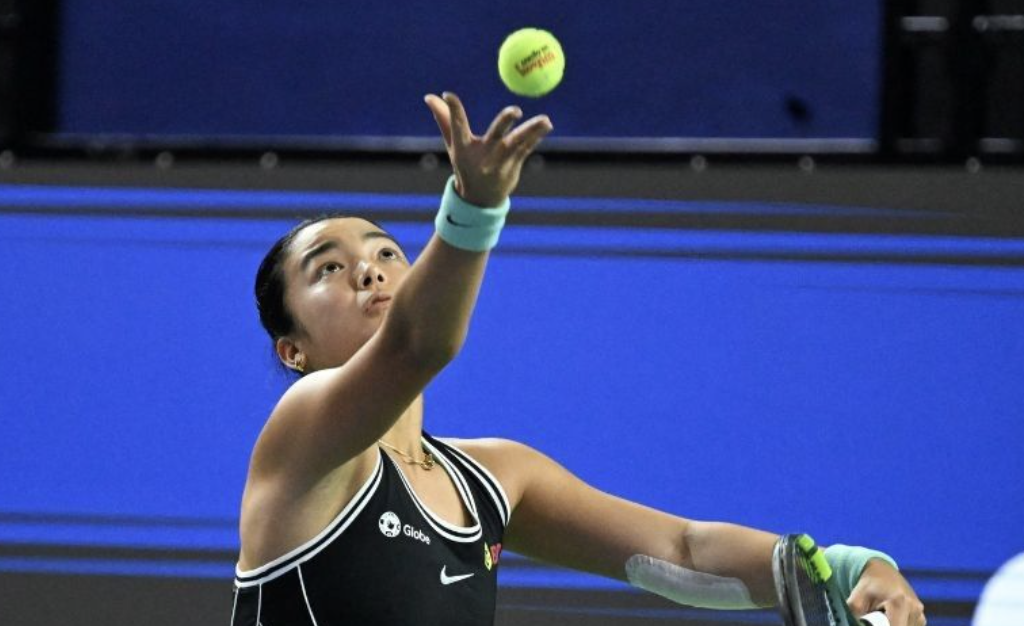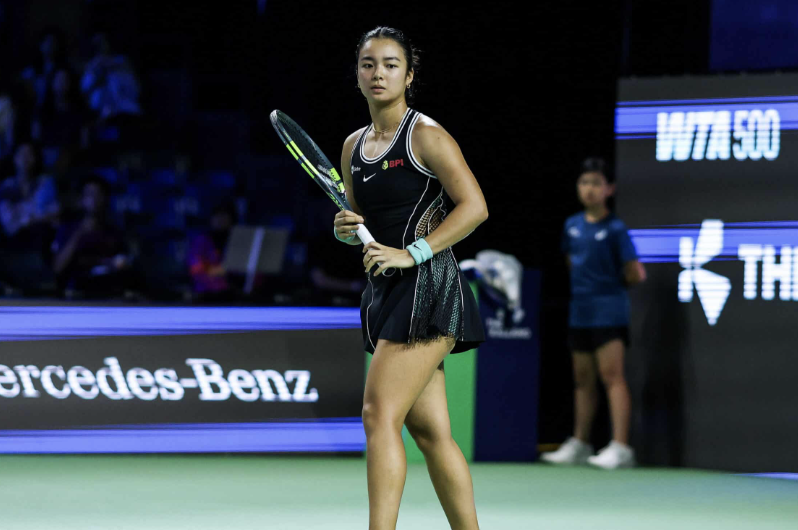
Alex Eala’s Ningbo Open campaign ended Thursday after Diana Shnaider defeated the Filipina in two competitive sets. The Russian sixth seed prevailed, 7-5, 6-4, after nearly two hours of closely contested Round of 16 tennis.
Shnaider Takes Tight Opening Set
Eala remained competitive throughout the opening set before Shnaider eventually created enough separation to secure a 7-5 advantage. Both players generated opportunities on return, preventing either server from establishing comfortable control across much of the opening frame.
Shnaider ultimately handled the decisive games more effectively, using stronger first-serve production to protect important points. Eala still pressured the Russian repeatedly, showing considerably greater resistance than a routine straight-set score might initially suggest.
Opening Set Turns on Small Margins
Sets reaching 5-5 frequently become decided through a handful of points rather than overwhelming superiority from either player. Eala remained within striking distance but could not convert enough late opportunities before Shnaider closed the opening set.
Eala Pushes Again in Second Set
The Filipina continued challenging Shnaider throughout the second set instead of allowing the opening disappointment to accelerate the match. Eala again created return opportunities while keeping the score close before the Russian completed the contest at 6-4.
Shnaider’s stronger first-serve efficiency provided an important difference during pressure situations across both sets. Eala won enough return points to remain competitive but could not consistently punish the Russian’s second serve when opportunities appeared.
Straight Sets Do Not Reflect Easy Match
Shnaider needed one hour and 55 minutes to complete a match containing several competitive service and return games. Eala’s challenge demonstrates progress against higher-ranked opposition even though ranking improvements ultimately depend upon converting competitive performances into victories.
Return Game Creates Multiple Chances
Eala generated 13 break-point opportunities during the match and converted six, repeatedly placing pressure upon Shnaider’s service games. That production demonstrates the Filipina’s return quality against a player ranked considerably higher within the women’s professional hierarchy.
However, Shnaider also attacked Eala’s serve effectively and won 39 points when returning throughout the contest. Matches containing numerous breaks often reward the player who protects serve more reliably during the few games where margins tighten significantly.
Service Stability Remains Development Priority
Eala’s return game already gives her opportunities against stronger opponents because she consistently creates pressure from the baseline. Improving first-serve effectiveness can complement that strength by reducing the number of service games requiring difficult defensive recoveries.
Ningbo Still Ends Losing Stretch
Before facing Shnaider, Eala had rediscovered winning form by defeating France’s Diane Parry, 6-3, 6-1, in Ningbo. That victory ended a difficult sequence and gave the Filipina valuable momentum entering her first professional meeting against Shnaider.
One Round of 16 defeat should therefore be viewed alongside the positive response Eala produced earlier during the tournament. The challenge involves carrying those stronger performances consistently into subsequent events rather than allowing another loss to restart an extended slump.
Parry Victory Still Carries Value
Tournament progress cannot be evaluated exclusively through the final match because earlier victories also reveal changes in performance. Eala leaves Ningbo with one convincing win and another competitive test against a player established near the world’s elite.
Higher-Ranked Opposition Provides Useful Benchmark
Shnaider entered Ningbo ranked around the world’s top 15, representing another significant measuring point for Eala’s development. Competitive sets against those opponents demonstrate proximity, but rankings ultimately reward victories rather than encouraging scorelines against superior players.
Eala’s next progression requires converting more close sets when matches reach decisive late-game situations against seeded opposition. Improving those margins can transform respectable performances into quarterfinal appearances and eventually deeper runs at increasingly prestigious tournaments.
Competitive Losses Must Become Future Wins
Playing higher-ranked opponents closely represents progress only when lessons eventually translate into stronger results during later meetings. Eala possesses enough return quality to create chances, making service protection and late-set execution logical areas for continued improvement.
Analytical Breakdown
Eala created enough break opportunities to trouble Shnaider, confirming her return game can pressure established top-level opponents. The larger difference came through service stability and execution during late games where narrow sets were ultimately decided. Ningbo still provided useful progress, but Eala’s next step involves converting competitive scorelines against seeded opponents into victories.