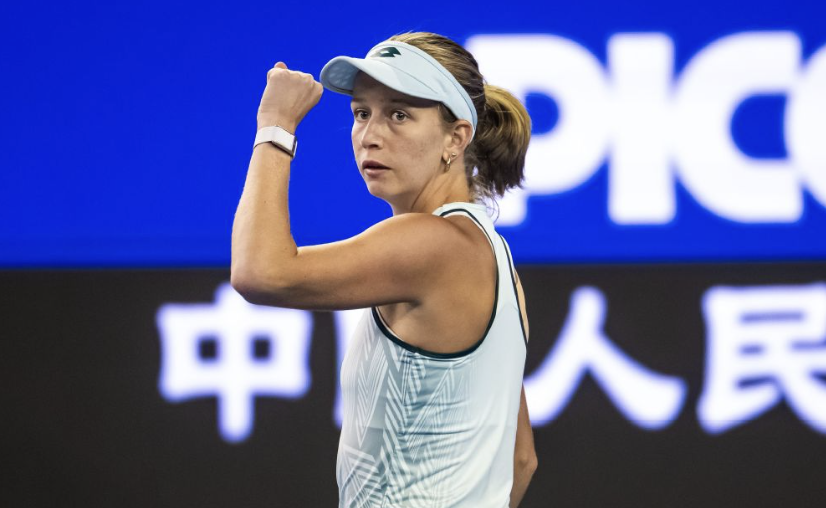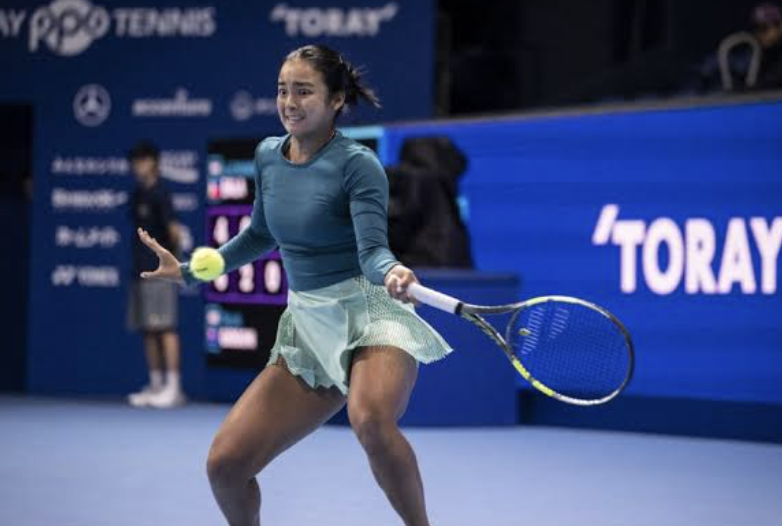
Alex Eala recovered from a difficult opening set Wednesday to defeat Australian Talia Gibson, 4-6, 6-2, 6-0, in Tokyo. The eighth-seeded Filipina advanced into the Pan Pacific Open quarterfinals, extending her strongest tournament run during this season’s Asian swing.
Gibson Takes Control of Opening Set
Eala and Gibson remained level through six games before the Australian created separation during the opening set. Gibson moved from 3-3 toward a 5-3 advantage, forcing Eala to protect her tournament campaign earlier than expected.
Eala held to reduce the deficit before Gibson broke serve during the tenth game to secure the set. The Australian’s aggressive approach produced enough pressure to disrupt Eala’s rhythm before the match changed dramatically afterward.
Opening Set Forces Tactical Response
Dropping the first set required Eala to adjust without allowing frustration to influence her decision-making. She needed greater consistency while reducing opportunities for Gibson to dictate rallies through aggressive first-strike tennis.
Eala Turns Match Around in Second
Eala immediately responded by establishing a 2-0 advantage during the second set and refusing to surrender control afterward. Gibson reduced the deficit to 3-2 before the Filipina captured three consecutive games to force a deciding set.
That sequence represented the match’s decisive momentum shift because Eala began controlling exchanges while Gibson’s error count increased. The Filipina also found greater success behind her serve, preventing the Australian from recreating her first-set pressure.
Second-Set Finish Changes Momentum
Winning three consecutive games to close the second set gave Eala complete control entering the deciding frame. Gibson suddenly needed to recover mentally while the Filipina carried confidence from her strongest stretch of the match.
Deciding Set Becomes One-Sided
Eala dominated the third set without surrendering a game, completing the comeback through an emphatic 6-0 finish. She repeatedly extended rallies until Gibson committed mistakes, while also attacking effectively whenever shorter opportunities appeared.
The deciding-set bagel completed a remarkable turnaround after Gibson had looked increasingly comfortable during the opening frame. Eala transformed the match by becoming more disciplined rather than attempting to overpower an opponent already producing numerous aggressive winners.
Patience Produces Decisive Advantage
Eala’s ability to remain patient became increasingly valuable as Gibson’s mistakes accumulated during the final two sets. Instead of chasing spectacular points, the Filipina forced her opponent to consistently execute difficult shots under growing scoreboard pressure.
Error Difference Shapes Comeback Victory
Eala finished with nine aces, demonstrating improved effectiveness behind her serve despite experiencing difficulties during the opening set. Gibson produced 32 winners but committed 47 unforced errors, compared with only 21 mistakes from the Filipina.
That statistical contrast explains why Gibson’s aggressive tennis became increasingly difficult to sustain as the match progressed. Eala accepted fewer outright winners because consistency eventually created considerably more free points than her opponent could overcome.
Efficiency Matters More Than Winner Count
Gibson’s larger winner total did not compensate for an error count more than twice Eala’s final number. The Filipina demonstrated how disciplined shot selection can defeat higher-risk offense when an opponent cannot consistently control attacking opportunities.
Shnaider Rematch Awaits in Quarterfinals
Eala will next face Diana Shnaider, creating an immediate rematch from their Ningbo Open meeting last week. Shnaider defeated the Filipina, 7-5, 6-4, during that Round of 16 encounter before both players traveled onward.
The quick rematch gives Eala recent tactical information about an opponent currently positioned among the world’s leading players. However, reversing the result requires more than familiarity because Shnaider previously controlled enough important points to secure straight sets.
Recent Defeat Provides Useful Information
Facing the same opponent within consecutive tournaments gives Eala unusually fresh evidence regarding patterns requiring adjustment. Her challenge involves applying those lessons without becoming overly focused upon correcting every detail from their previous match.
Analytical Breakdown
Eala changed the match through consistency, allowing Gibson’s aggressive approach to become increasingly expensive across the final two sets. Winning eight consecutive games to finish demonstrated impressive control after the Australian had taken the opening set. Shnaider presents another level of resistance, but Eala now carries recent tactical information and considerably stronger momentum into their rematch.