Philippine Azkals Chase First AFF Suzuki Cup Final
The Philippine Azkals entered the delayed 2020 AFF Suzuki Cup determined to overcome one of the most difficult preparations in national team history while chasing their first appearance in the tournament final. Despite months of uncertainty caused by the COVID-19 pandemic, the squad remained confident that it could compete with Southeast Asia’s traditional football powers.
Years of consistent regional progress have transformed the Azkals into regular semifinal contenders, but the next challenge is taking the final step toward a championship match. That opportunity begins with a demanding tournament where preparation, squad chemistry, and tactical discipline could prove just as important as individual talent.
The Azkals Continue Chasing their Biggest Regional Breakthrough
ABS-CBN News reported that the Philippine Football Federation entered the 2020 AFF Suzuki Cup believing the national team possessed enough experience and determination to compete for its first championship appearance. Although the tournament was delayed and preparations became unusually complicated, the federation remained optimistic about the team’s long-term progress.
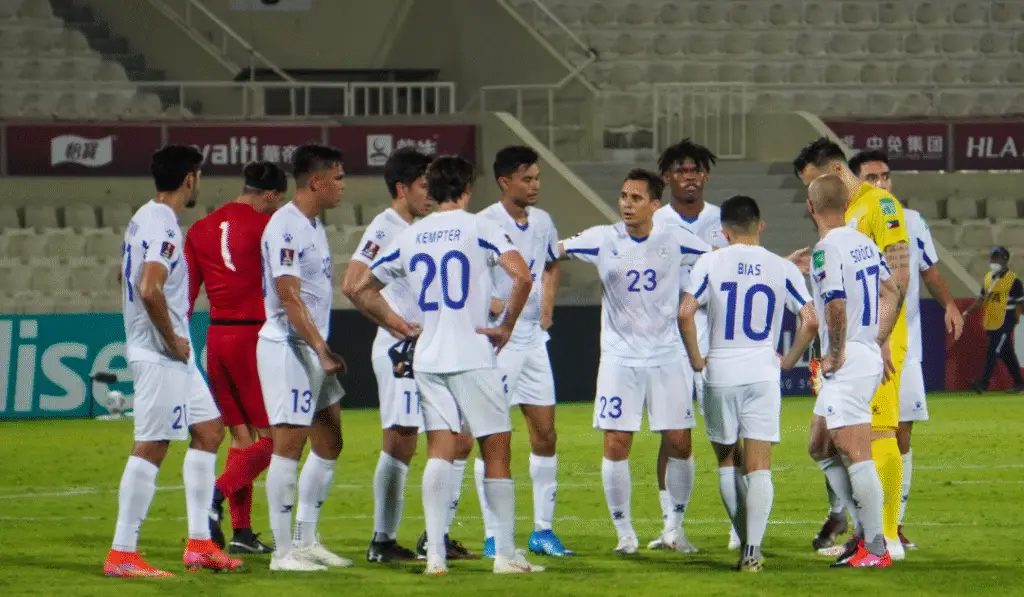
The Suzuki Cup has played a defining role in Philippine football history because it introduced the Azkals to a broader regional audience following their memorable semifinal breakthrough in 2010. Since then, the Philippines has repeatedly challenged Southeast Asia’s strongest programs while continuing its pursuit of a place in the tournament final.
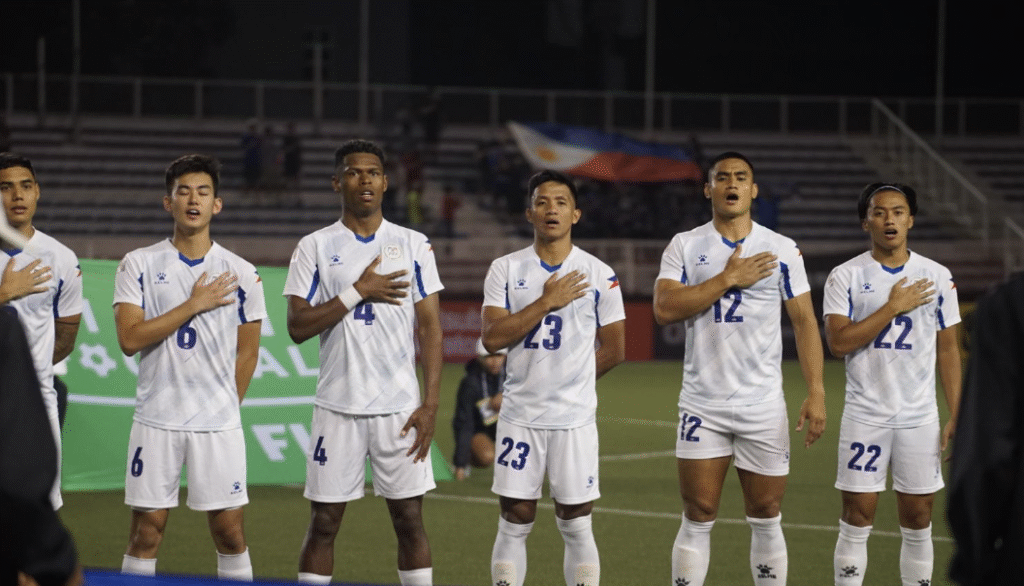
Image from: GMA Network
The Federation Believes the Team Can Reach New Heights
PFF president Mariano “Nonong” Araneta emphasized the tournament’s importance.
“The Suzuki Cup will always be remembered as the tournament where the Azkals gained the recognition and respect of our Southeast Asian neighbors.”
He also shared the federation’s ambition for this campaign.
“We’re hoping that this time, it’s also the tournament where we’ll get our first major trophy.”
Those comments reflected the growing belief that the Azkals had developed into legitimate regional contenders.
Pandemic Disruptions Created an Unprecedented Preparation Period
Few Philippine national teams have experienced a buildup as challenging as the one leading into the delayed Suzuki Cup. Travel restrictions, quarantine requirements, postponed schedules, and unavailable overseas-based players forced the coaching staff to constantly adjust its plans before the opening match.
The tournament itself also adopted a centralized format in Singapore instead of the traditional home-and-away structure, requiring every participating nation to adapt quickly. Limited preparation time placed even greater importance on organization, tactical familiarity, and maintaining strong team chemistry throughout the competition.
Recommended Article: Neymar Mocks World Cup Prediction After Win
Several Key Players Became Unavailable
The Azkals entered the tournament without several experienced contributors.
- Neil Etheridge.
- Gerrit Holtmann.
- Patrick Strauss.
- Raphael Obermair.
- Michael Kempter.
- Jarvey Gayoso.
- Manny Ott.
- Carlie De Murga.
Many overseas-based players remained unavailable because the tournament fell outside FIFA’s official international calendar, while injuries further reduced the squad’s depth before the opening match.
Quarantine Restrictions Limited Valuable Training Time
Preparation challenges continued even after the Philippine delegation arrived in Singapore because quarantine protocols delayed the team’s first complete training sessions. Those restrictions reduced valuable time for tactical rehearsals, set-piece preparation, and building match fitness before the tournament officially began.
National teams often rely on short training camps to establish chemistry because players arrive from different clubs and football systems around the world. Losing several of those sessions forced the coaching staff to emphasize communication, organization, and quick tactical adaptation throughout the competition.
Team Officials Praised the Players’ Commitment
Team manager Dan Palami acknowledged the unusual circumstances.
“This particular version, or edition of the Suzuki Cup has been the most challenging for myself, personally, and the team, as well as I’m sure, PFF and the coaching staff.”
He also explained how quarantine affected the team’s schedule.
“We have yet to train. Maybe the players will be released from quarantine today so that will be the start of training.”
Despite those obstacles, Palami remained confident in the players’ commitment.
“The only thing that comforts me is the fact that these players have always been giving their 100% every time they step on the pitch.”
Experience and Organization Remain the Azkals’ Greatest Strengths
Despite the unavailable players, the Philippines retained a veteran core capable of leading the squad through another demanding regional tournament. Captain Stephan Schröck brought valuable international experience alongside Patrick Reichelt, Mike Ott, Martin Steuble, Angel Guirado, Kenshiro Daniels, and naturalized striker Bienvenido Marañon.
Head coach Scott Cooper continued building a disciplined system centered on compact defending, organized pressing, and quick attacking transitions after winning possession. That tactical identity helped the Azkals remain difficult to break down while creating opportunities through collective movement rather than individual brilliance.
Cooper Trusted His Squad’s Mentality
The head coach emphasized the team’s greatest qualities.
“We have a squad of players who are typically very mentally strong.”
He also explained the mindset required during tournament football.
“As with any national team tournament, you have to be organized going in, you have to keep a good team spirit, and you have to be focused.”
Those characteristics became even more important after such a disrupted preparation period.
Group A Presents a Demanding Road to the Knockout Stage
The Philippines entered Group A knowing that every match would carry significant importance in the race for the semifinals. Facing experienced regional rivals within a compressed tournament schedule left little room for mistakes, making consistency essential from the opening fixture.
Thailand and Singapore entered as established contenders, while Myanmar and Timor-Leste presented different tactical challenges capable of disrupting qualification hopes. Successfully adapting to contrasting playing styles would become one of the Azkals’ biggest priorities throughout the group stage.
Every Opponent Offers a Different Test
Group A featured several familiar rivals.
- Singapore.
- Thailand.
- Myanmar.
- Timor-Leste.
Maintaining defensive discipline while creating efficient transition attacks would be critical against each opponent.
Analytical Breakdown: Defensive Discipline Drives Tournament Success
Tournament football often rewards the teams that establish defensive stability before chasing attacking creativity. From my experience as a football player, compact positioning, disciplined pressing, and effective communication become even more important when preparation time is limited because those principles reduce unnecessary mistakes under pressure. The Azkals’ experienced core gave Scott Cooper a strong foundation for implementing that approach despite the unusual circumstances.
I also believe the Philippines’ biggest advantage entering the Suzuki Cup was its collective mentality rather than individual star power. The squad had already demonstrated resilience during previous international competitions, and that experience could help the players remain composed throughout a demanding group-stage campaign. If the Azkals consistently defended as a unit while maximizing transition opportunities, reaching a historic first Suzuki Cup final remained a realistic objective.
Frequently Asked Questions
Why was the 2020 AFF Suzuki Cup delayed?
The tournament was postponed because of the COVID-19 pandemic before eventually being staged in Singapore.
Who captained the Philippine Azkals during the tournament?
Veteran midfielder Stephan Schröck served as the national team captain.
Why were several overseas-based players unavailable?
The competition was held outside FIFA’s official international calendar, preventing some clubs from releasing their players.
Which teams competed with the Philippines in Group A?
The Azkals faced Singapore, Thailand, Myanmar, and Timor-Leste.
What was the Philippines hoping to achieve?
The national team aimed to reach its first-ever AFF Suzuki Cup final and compete for its first regional championship.
Disclaimer: Headline Image from Sports Inquirer – Inquirer.net.